By Dr. Mukta Tulpule, Dermatologist, Sahawas Skin Clinic, Pune
One of the most common questions I hear from patients with psoriasis is:
“Doctor, why does my psoriasis keep coming back?”
This is a very understandable question.
A patient may use treatment, see the skin improve, stop the medicines when the skin looks better, and then notice the patches returning after some time.
This can be frustrating, especially when psoriasis has been affecting the skin for months or years.
The important thing to understand is that psoriasis is a chronic inflammatory skin condition. It can usually be controlled very well with appropriate treatment, but it is not something where we can promise that it will never come back.
The aim of treatment is to control the disease, reduce symptoms and flare-ups, clear the affected skin as much as possible and help the patient maintain good skin health over the long term.
What is psoriasis?
Psoriasis is a chronic inflammatory condition in which skin cells build up more rapidly than normal.
It commonly causes areas of red, raised and scaly skin. The patches may be itchy, dry or uncomfortable and can occur on different parts of the body.
Common areas include:
- Elbows
- Knees
- Scalp
- Lower back
- Palms and soles
- Nails
- Skin folds
The appearance can vary from person to person.
This is why I would not recommend assuming that every scaly or itchy patch is psoriasis. Eczema, fungal infections and other skin conditions can sometimes look similar and require different treatment.
A correct diagnosis is the first step.
Why does psoriasis keep coming back?
Psoriasis has a tendency to fluctuate.
There may be periods when the skin is almost clear, followed by a flare.
Different patients have different triggers. These may include:
- Stress
- Infections
- Skin injury
- Certain medications
- Smoking or alcohol
- Lack of appropriate treatment
- Stopping treatment too early
- Other individual triggers
However, there is no single trigger that explains psoriasis in every patient.
One of the things I discuss with patients is that a flare does not necessarily mean that they have done something wrong.
Psoriasis is a chronic disease and often needs ongoing management.
Is psoriasis completely curable?
This is an important question to answer honestly.
At present, there is no guaranteed permanent cure for psoriasis.
However, psoriasis can often be controlled very effectively.
Many patients can achieve long periods with very little or no visible disease when they receive appropriate treatment and follow-up.
The treatment plan depends on the type and severity of psoriasis, the areas involved, how much of the body is affected, previous treatment and other health factors.
The goal is not simply to give a cream and send the patient home.
The goal is to find a treatment plan that can control the disease safely over time.
What are the treatment options for psoriasis?
There is no single psoriasis treatment that is right for everyone.
Depending on the individual patient, treatment may include:
Topical treatment
Creams, ointments or lotions are commonly used, particularly when psoriasis affects limited areas of the skin.
The medication is selected according to the location and severity of the psoriasis.
It is important not to use prescription steroid creams or combination creams on your own for prolonged periods.
Phototherapy
For selected patients, controlled ultraviolet light treatment can be useful.
Phototherapy is different from simply exposing the skin to sunlight. The treatment is administered in a controlled medical setting with an appropriate schedule.
Systemic treatment
Patients with more extensive or difficult-to-control psoriasis may require medicines that work throughout the body.
The choice depends on the severity of the disease, associated conditions, previous treatment and the individual patient’s medical history.
Advanced treatments
For selected patients with moderate-to-severe psoriasis, advanced systemic therapies including biologic treatments may be considered.
These treatments require proper evaluation and medical supervision.
The important point is that more expensive treatment is not automatically better treatment.
The right treatment is the one that is appropriate for the patient’s disease and overall health.
Can psoriasis affect the joints?
Yes.
This is something patients with psoriasis should be aware of.
Some people with psoriasis can develop psoriatic arthritis, which can cause joint pain, stiffness or swelling.
If you have psoriasis and experience:
- Persistent joint pain
- Swelling of fingers or toes
- Morning stiffness
- Heel pain
- Difficulty moving a joint
you should discuss it with your dermatologist.
Early recognition of joint symptoms is important.
Can psoriasis affect the scalp and nails?
Yes.
Psoriasis does not only affect the skin of the elbows and knees.
It can involve the scalp and cause scaling that may sometimes be mistaken for severe dandruff.
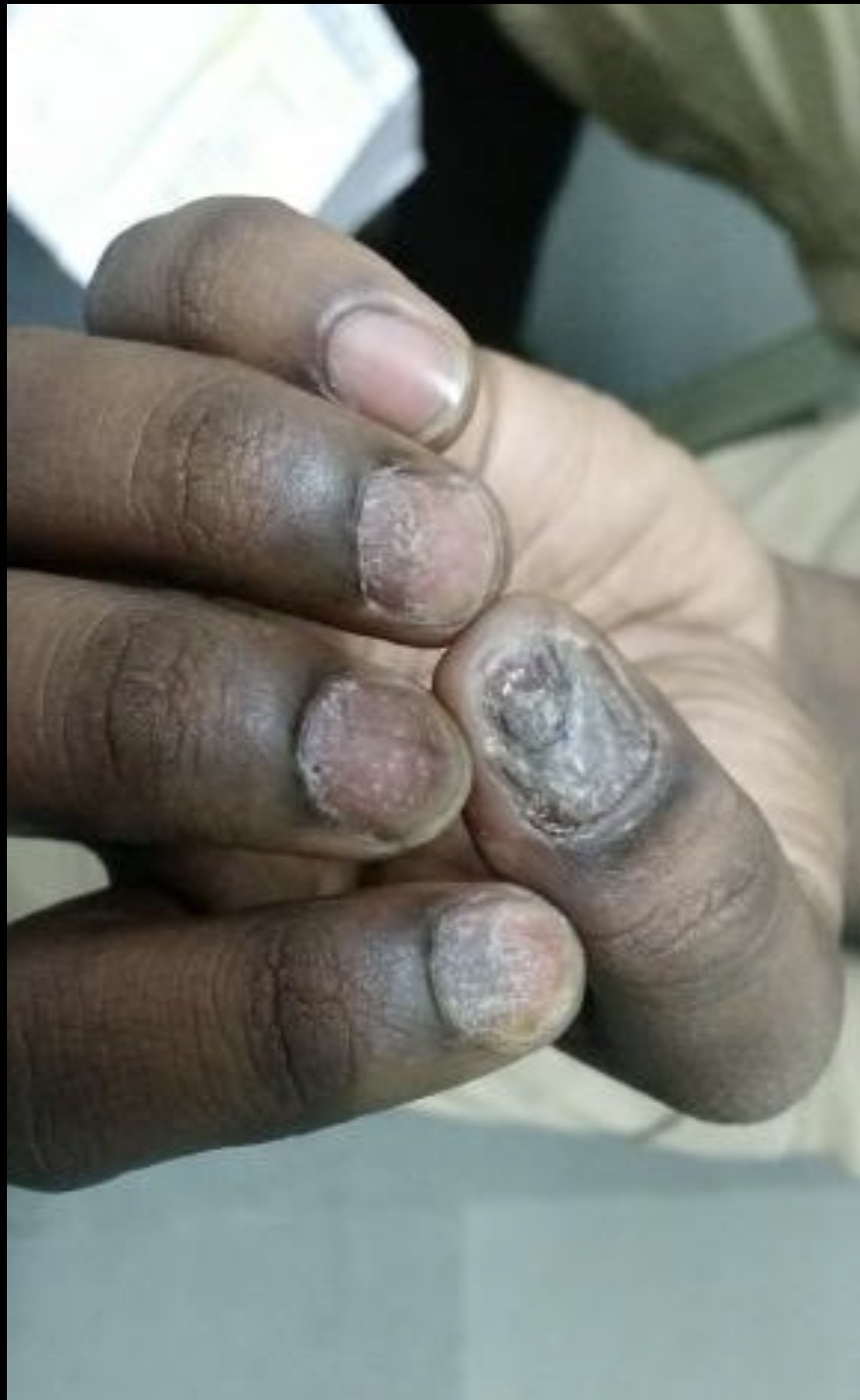
It can also affect the nails, causing changes such as:
- Pitting
- Discolouration
- Thickening
- Separation of the nail from the nail bed
Nail or scalp involvement can sometimes require a different treatment approach.
Is psoriasis contagious?
No.
Psoriasis does not spread from one person to another through touching, sharing food, towels or being around someone with psoriasis.
This is an important misconception to correct because patients sometimes feel embarrassed about visible psoriasis or worry about how others will react.
There is no reason to isolate someone because they have psoriasis.
Can stress worsen psoriasis?
Stress can be an important factor for some patients.
However, I would avoid telling a patient that their psoriasis is simply “because of stress.”
Psoriasis is a complex inflammatory disease.
Stress may contribute to flare-ups in some individuals, but it is not the only cause.
Managing stress, getting adequate sleep and maintaining a healthy lifestyle can be helpful alongside appropriate medical treatment.
They should not replace treatment when treatment is required.
Should you stop treatment when the skin becomes clear?
This is something I discuss frequently with psoriasis patients.
If the skin improves, patients understandably feel that treatment is no longer necessary.
But depending on the treatment being used, stopping suddenly or changing the treatment without medical advice may increase the chance of another flare.
The correct approach depends on the medication and the individual patient.
Some patients require maintenance treatment, while others may need a different strategy once the disease is controlled.
Do not make changes to long-term psoriasis treatment without discussing them with your dermatologist.
When should you see a dermatologist for psoriasis?
I would recommend a dermatology consultation if you have:
- Recurrent red and scaly patches
- Persistent scalp scaling
- Thick plaques on the elbows or knees
- Psoriasis affecting the palms or soles
- Nail changes
- Extensive or rapidly worsening disease
- Significant itching or discomfort
- Repeated flare-ups despite treatment
- Joint pain along with psoriasis
It is particularly important to get the diagnosis confirmed if you have been treating yourself for a long time without improvement.
Sometimes what looks like psoriasis may actually be another condition.
Psoriasis treatment in Pune
At Sahawas Skin Clinic in Karvenagar, Pune, patients with psoriasis and other chronic skin conditions are evaluated based on the type, extent and severity of their disease.
My approach is to first understand the condition and the patient’s previous treatment, rather than simply prescribing the same treatment to everyone.
Depending on the individual case, treatment may include topical medicines, phototherapy or systemic and advanced therapies when appropriate.
I also discuss the chronic nature of psoriasis with patients because understanding the disease is an important part of managing it.
The aim is not to promise a permanent cure.
The aim is to control the disease safely and help you maintain good skin for the long term.
Sahawas Skin Clinic is located in Karvenagar, Pune, and is accessible to patients from Kothrud, Warje, Sinhagad Road, Bavdhan, Deccan and nearby areas.
When should you consult a dermatologist rather than keep trying creams?
If you have been using different creams for months and the rash keeps returning, I would recommend getting the diagnosis reviewed.
Repeated self-treatment can sometimes make the situation more confusing, particularly when steroid-containing combination creams have been used without supervision.
A proper dermatology consultation can help answer three basic questions:
Is this actually psoriasis?
How extensive or active is the disease?
What treatment is appropriate for you?
Those answers are more useful than simply trying another cream
Frequently Asked Questions
Is psoriasis contagious?
No. Psoriasis is not contagious and cannot be transmitted by touching someone who has the condition.
Can psoriasis be cured permanently?
Psoriasis is a chronic condition and there is currently no guaranteed permanent cure. However, it can often be controlled very effectively with appropriate treatment and long-term management.
What is the best treatment for psoriasis?
There is no single best treatment for everyone. Treatment depends on the type, severity, location and extent of psoriasis, previous treatments and the patient’s overall health.
Can psoriasis cause joint pain?
Yes. Some patients with psoriasis develop psoriatic arthritis. Persistent joint pain, stiffness or swelling should be discussed with a dermatologist.
Can I use steroid creams for psoriasis?
Steroids can be an important part of psoriasis treatment when prescribed appropriately, but the strength, location and duration of treatment matter. Avoid prolonged self-medication with steroid or combination creams.
Does psoriasis get worse in winter?
Some patients notice worsening during colder or drier months, while others may have different triggers. Regular moisturisation and appropriate medical treatment can help manage symptoms.
Can psoriasis affect the scalp?
Yes. Scalp psoriasis is common and can sometimes be mistaken for dandruff. Treatment depends on the severity and extent of scalp involvement.
Where can I get psoriasis treatment in Pune?
Psoriasis can be evaluated and treated at Sahawas Skin Clinic in Karvenagar, Pune. Patients from Kothrud, Warje, Sinhagad Road, Bavdhan, Deccan and nearby areas can consult for dermatological evaluation and treatment.
Final word
If you have psoriasis, I would encourage you not to think of treatment as a one-time process.
There may be periods when the skin is clear and periods when the disease becomes active again.
That does not mean treatment has failed.
With the right diagnosis, appropriate treatment and regular follow-up, psoriasis can often be controlled very well.
And if your skin problem keeps returning despite treatment, don’t keep changing creams on your own.
Get the diagnosis and treatment plan reviewed by a dermatologist.https://sahawasskinclinic.com/psoriasis-eczema-pune/
— Dr. Mukta Tulpule
Dermatologist
Sahawas Skin Clinic, Karvenagar, Pune