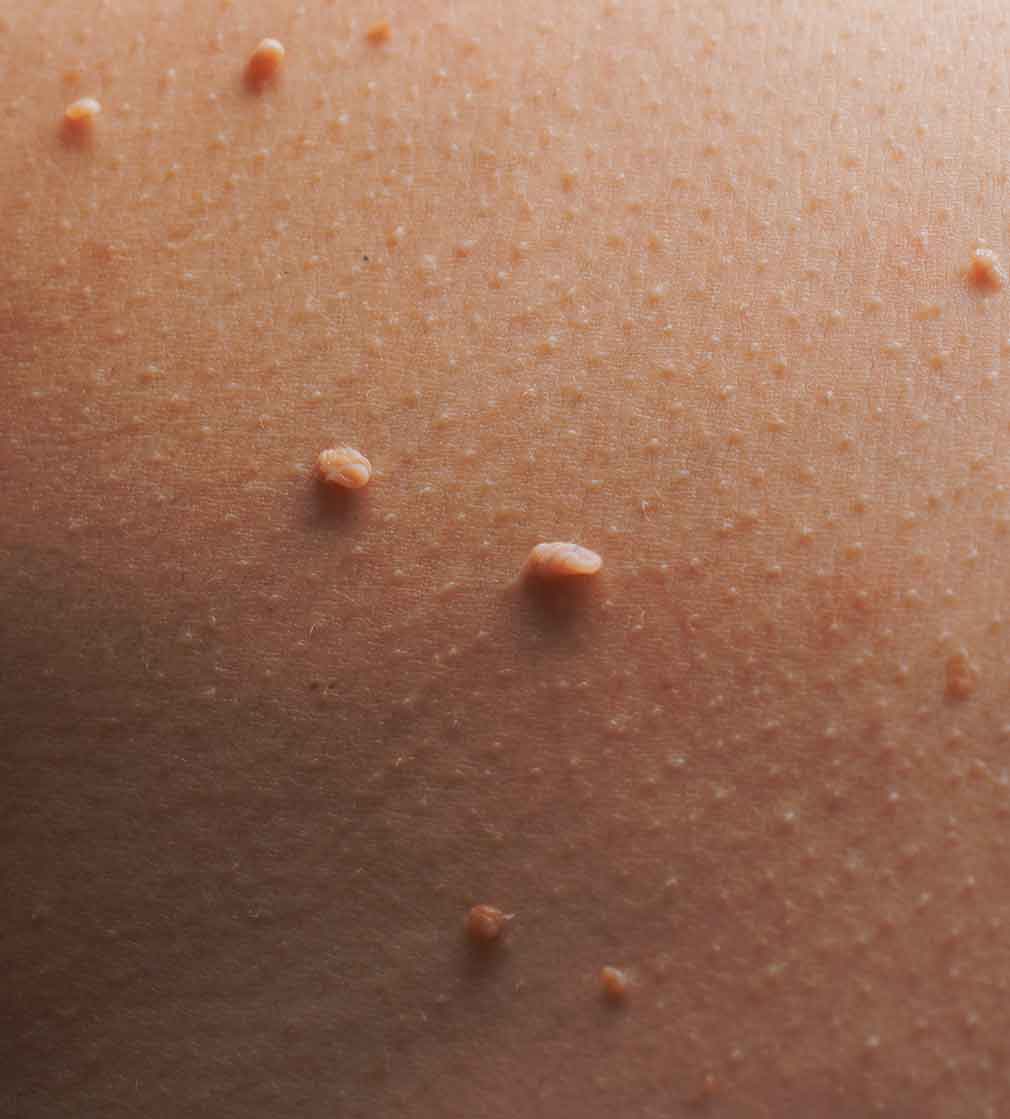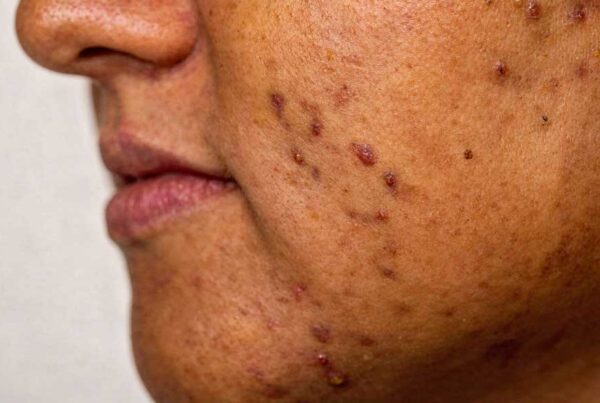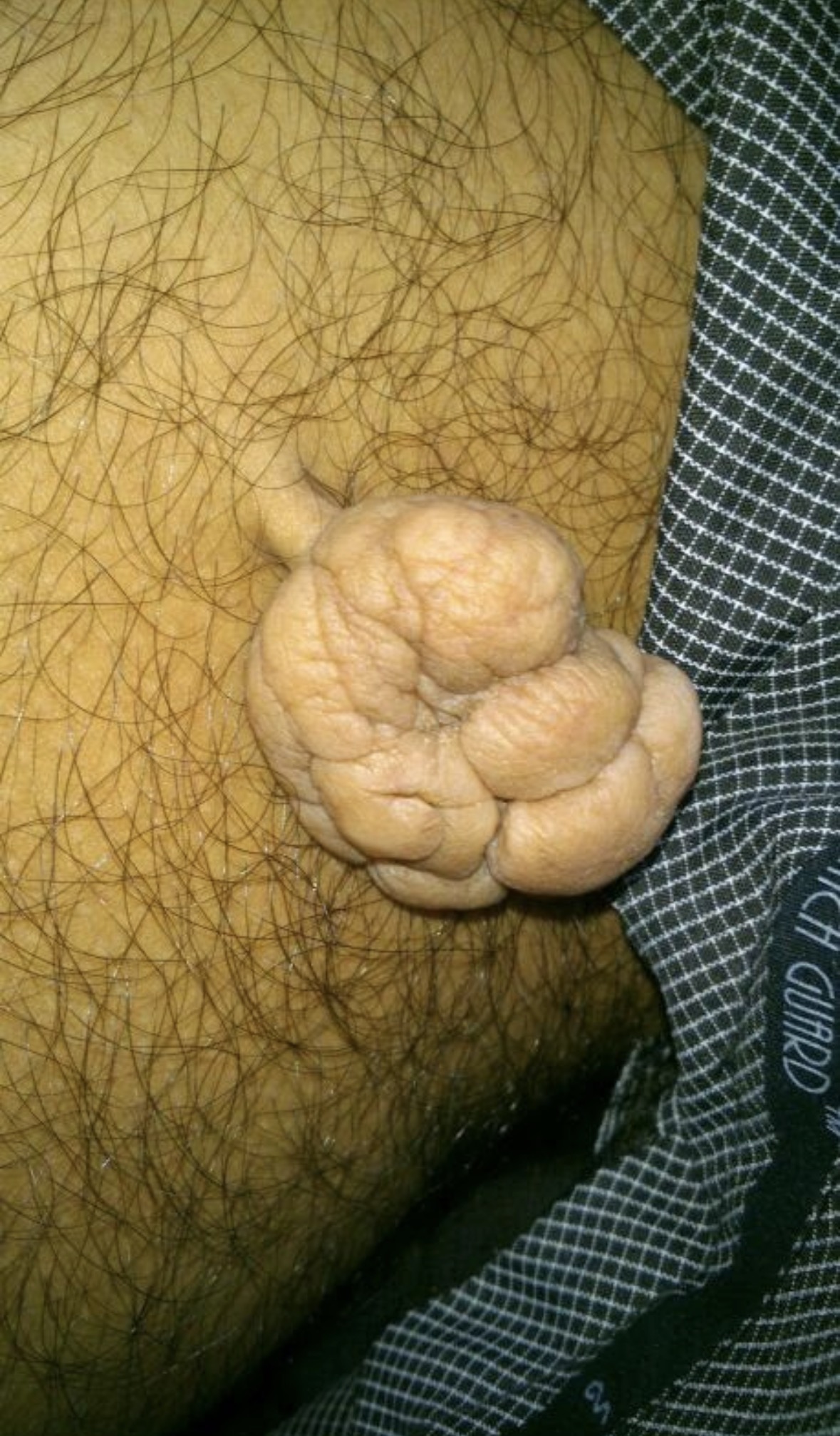
Radiofrequency cautery, surgical removal and other dermatologist-guided treatments for moles, skin tags and warts in Kothrud, Karvenagar and nearby areas of Pune
Moles, skin tags and warts are extremely common skin growths. Most are harmless, but they can become a cosmetic concern, repeatedly catch on clothing or jewellery, bleed after friction, or simply be something you would prefer not to have.
At Sahawas Skin Clinic, I frequently see patients from Kothrud, Karvenagar, Warje, Sinhagad Road, Deccan, Bavdhan and surrounding areas of Pune who want to know whether a mole, wart or skin tag can be removed safely and which procedure is best.
I am Dr. Mukta Tulpule, Dermatologist, and my approach is simple: first identify exactly what the skin growth is, and then choose the safest and most appropriate method of removal.
Radiofrequency (RF) cautery is one of the useful procedures we may use for selected benign skin growths. However, RF is not automatically the best treatment for every mole, wart or skin tag. In some situations, surgical excision, shave removal, cryotherapy or another treatment is more appropriate.
The right procedure depends on the diagnosis, size, depth, location, appearance and behaviour of the lesion.
What is Radiofrequency Cautery?
Radiofrequency cautery, also called RF surgery or radiofrequency ablation, uses a controlled high-frequency electrical current to cut, ablate or coagulate selected skin tissue.
Unlike the name “cautery” may suggest, modern RF dermatologic procedures are highly controlled. Depending on the device and technique, RF can be used for cutting, coagulation, shave removal and superficial destruction of selected skin lesions.
RF surgery has been described in dermatologic literature for conditions including skin tags, warts, certain benign moles, seborrhoeic keratoses and other superficial skin growths. (IJDVL)
For appropriate lesions, one of the advantages is that the procedure can be performed accurately in a dermatologist’s procedure room, often under local anaesthesia.
Why do dermatologists use RF cautery?
For selected lesions, RF can offer:
- Precise removal of superficial skin growths
- Control of bleeding during the procedure
- A relatively quick procedure
- Local anaesthesia rather than general anaesthesia
- No stitches in many superficial procedures
- Convenient outpatient treatment
- Good cosmetic results when the lesion and technique are appropriately selected
However, “no stitches” does not mean “no wound.” The treated area still needs to heal, and temporary redness, crusting or pigmentation can occur.
Which Skin Growths Can Be Removed?
Before deciding on RF cautery or any other procedure, it is important to establish whether the growth is actually a mole, skin tag, wart or another type of lesion.
Several skin conditions can look similar to an untrained eye.
1. Mole Removal
A mole (nevus) is a common pigmented or skin-coloured growth.
Some moles are flat while others are raised. They may be brown, black, pink or close to the colour of the surrounding skin.
Most moles do not require treatment. A mole may nevertheless be removed because:
- It is cosmetically bothersome
- It repeatedly catches on clothes
- It gets irritated while shaving
- It is located in an area exposed to repeated trauma
- The patient dislikes its appearance
- The dermatologist has a medical reason to remove it
The American Academy of Dermatology notes that dermatologists may remove moles that are bothersome, cosmetically unwanted or suspicious. (AAD)
Can every mole be removed with RF?
No.
This is an important distinction.
RF shave removal or ablation may be appropriate for selected benign, superficial, raised moles. But if a mole looks suspicious, has concerning clinical features, or requires complete removal for diagnostic purposes, surgical excision may be the safer choice.
When there is clinical suspicion, the removed tissue may need to be sent for histopathological examination.
I do not recommend destroying a suspicious pigmented lesion simply for cosmetic reasons before establishing that it is suitable for that type of procedure.
2. Skin Tag Removal
Skin tags, medically known as acrochordons, are soft benign growths that commonly occur around:
- Neck
- Underarms
- Eyelids
- Groin
- Under the breasts
- Areas where skin rubs against skin
- Areas where jewellery or clothing repeatedly causes friction
Skin tags are usually harmless, but they can become irritated, painful or bleed after repeated friction. (AAD)
RF cautery for skin tags
RF can be particularly useful for selected small skin tags.
Depending on the size and shape of the skin tag, it may be removed at its base using an RF technique, sometimes with local anaesthesia.
For many small skin tags, treatment is quick and does not require stitches.
Other options include:
- Snip excision
- Shave removal
- Cryotherapy
- Electrosurgery/electrodesiccation
The choice depends on the size, number, location and morphology of the skin tags.
Should you remove skin tags at home?
I strongly advise against trying to cut, burn or chemically destroy skin tags yourself.
A growth that looks like a skin tag may sometimes actually be a wart, mole or another skin lesion. Home removal can also result in bleeding, infection, burns or unnecessary scarring. The American Academy of Dermatology specifically advises against using unapproved home products for skin-tag removal. (AAD)
3. Wart Removal
Warts are different from skin tags.
Most common warts are caused by human papillomavirus (HPV) and can spread from one area of skin to another. They may occur on the hands, fingers, feet, face or other areas.
Warts can have a rough or thickened surface and may sometimes be confused with other skin growths.
Treatment depends on the type of wart, location, thickness, number of lesions and previous treatment history.
Possible treatments include:
- Topical wart medicines
- Salicylic acid-based treatment
- Cryotherapy
- RF cautery/electrosurgery
- Curettage and cautery
- Surgical removal in selected cases
- Other dermatologist-guided treatments for resistant warts
RF cautery can be useful for selected warts, particularly when a physical destructive procedure is appropriate. Dermatology guidelines recognise cautery and curettage among the surgical approaches used for certain warts. (OUP Academic)
Why do warts sometimes come back after removal?
This is a common question.
Removing the visible wart does not always guarantee that HPV infection will never recur. Some warts can be persistent or recur, particularly in difficult locations such as weight-bearing areas.
Therefore, wart treatment is not simply about “burning the wart.” The treatment needs to be selected according to the type of wart and the patient’s individual situation.
RF Cautery vs Surgical Excision
Patients often ask me:
“Doctor, should I do RF or surgery?”
There is no single answer because the two procedures serve different purposes.
Radiofrequency cautery
RF may be preferred for selected:
- Small skin tags
- Superficial benign skin growths
- Certain raised benign moles
- Selected warts
- Some seborrhoeic keratoses and similar superficial lesions
Potential advantages include a relatively quick procedure, good control of bleeding and, for many superficial lesions, no need for sutures.
Surgical excision
Surgical excision involves cutting out the lesion, usually under local anaesthesia, and closing the wound with stitches when necessary.
It may be preferred when:
- The lesion is larger or deeper
- Complete removal is required
- The lesion has suspicious features
- Histopathological examination is important
- The shape or location makes RF unsuitable
- The dermatologist believes excision will provide a better or safer result
For suspicious moles, complete surgical removal can allow the tissue to be examined under a microscope. (AAD)
The objective is not to choose the most technologically impressive procedure. The objective is to choose the correct procedure for that particular skin lesion.
RF Cautery vs Cryotherapy
Cryotherapy uses extreme cold, commonly liquid nitrogen, to destroy selected skin lesions.
It is frequently used for certain warts and other superficial lesions.
RF and cryotherapy work differently.
| Feature | RF Cautery | Cryotherapy |
|---|---|---|
| Method | Controlled radiofrequency/electrosurgical treatment | Freezing with cryogen |
| Common use | Selected skin tags, superficial benign lesions, selected warts | Warts and selected superficial lesions |
| Bleeding control | Good coagulation control | Generally does not provide the same immediate coagulation effect |
| Stitches | Often not required | Not required |
| Healing | Usually crusting/healing of treated area | Blistering, crusting and healing may occur |
| Tissue for histopathology | Depends on technique | Usually no intact tissue specimen |
| Suitability | Depends strongly on lesion type | Depends strongly on lesion type |
Neither treatment is universally “better.”
The dermatologist chooses according to the diagnosis.
What Happens During RF Mole, Skin Tag or Wart Removal?
The exact procedure varies according to the lesion, but the process generally involves several steps.
Step 1: Clinical examination
First, I examine the lesion carefully.
For pigmented lesions, the clinical appearance and, when appropriate, dermoscopic assessment help determine whether the lesion appears suitable for cosmetic removal or needs further evaluation.
This step is particularly important for moles.
Step 2: Selecting the treatment
I decide whether RF, shave removal, surgical excision, cryotherapy or another treatment is appropriate.
The decision depends on:
- Diagnosis
- Size
- Depth
- Location
- Number of lesions
- Skin type
- Previous treatment
- Cosmetic expectations
- Whether tissue needs to be sent for pathology
Step 3: Local anaesthesia
For procedures that require it, local anaesthetic is used to numb the area.
This means you remain awake, but the treated area is made comfortable.
Step 4: Removal
The lesion is removed or treated using the selected technique.
RF procedures are performed with controlled settings and an appropriate electrode or tip for the lesion being treated. Proper technique is important because excessive thermal injury can increase tissue damage and affect healing. (IJDVL)
Step 5: Wound care
After removal, you will receive instructions regarding cleaning, ointment, dressing and sun protection.
The treated area may initially appear:
- Red
- Slightly swollen
- Darker
- Crusted
- Superficially raw
This is part of the normal healing process for many superficial procedures.
Will RF Cautery Leave a Scar?
This is one of the most common concerns, particularly when the lesion is on the face.
The honest answer is:
There is no procedure that can guarantee zero scarring.
The final appearance depends on:
- Depth of treatment
- Size of the lesion
- Location
- Individual healing tendency
- Skin type
- Infection or trauma during healing
- Sun exposure after treatment
- Whether the lesion was superficial or deep
With appropriately selected superficial lesions and good technique, the cosmetic result can be very good.
However, temporary redness or pigmentation can persist for some time, particularly in Indian skin types.
This is why I prefer to discuss the expected healing process before the procedure rather than promising a “scarless” treatment.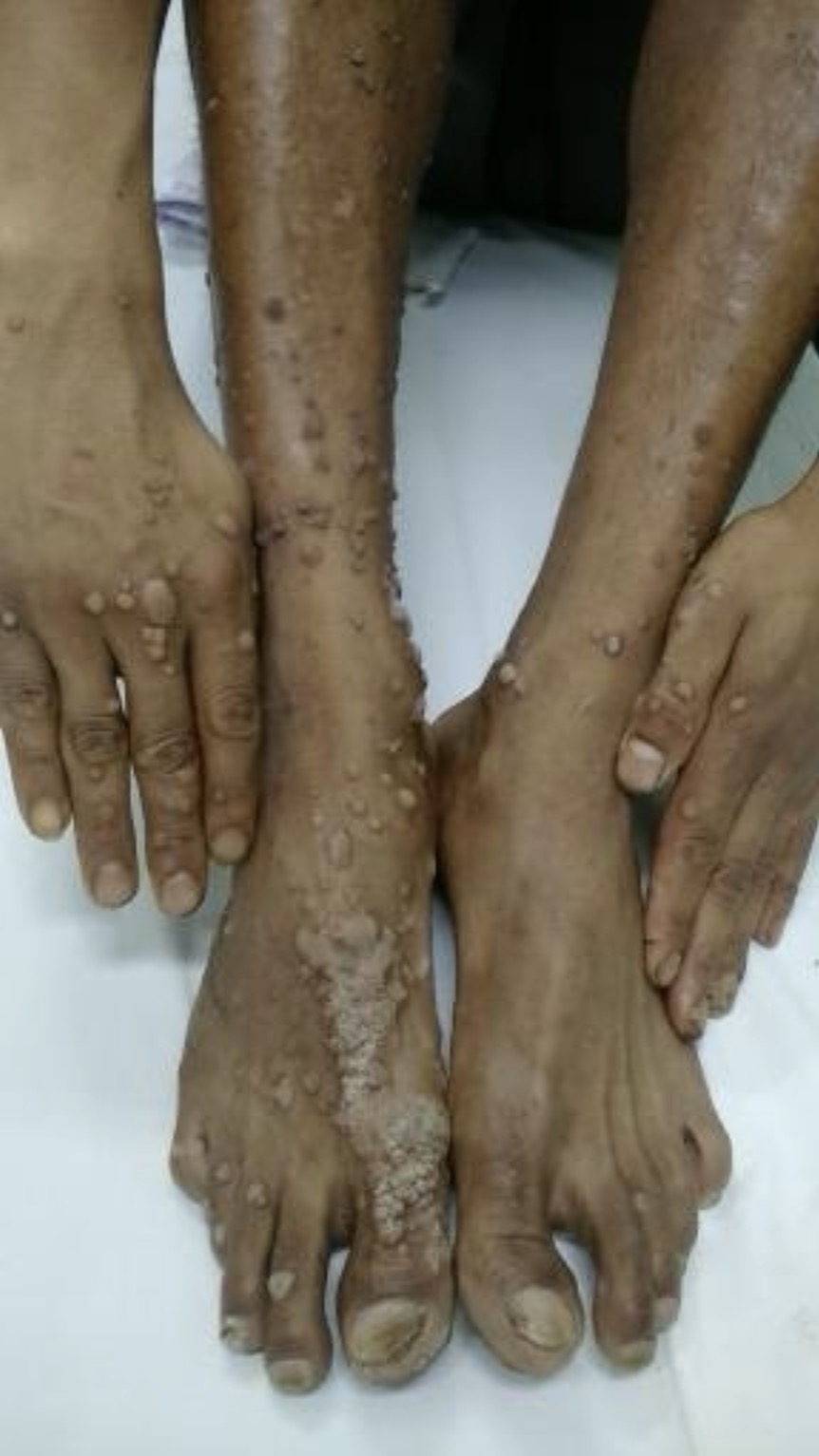
How Long Does It Take to Heal?
Healing depends on the size and depth of the treated lesion and the procedure used.
A small superficial lesion may heal relatively quickly, while a larger or deeper treatment area can take longer.
During healing, a small crust may form.
Important aftercare
After your procedure:
- Keep the area clean
- Follow the wound-care instructions provided
- Do not pick or scratch the crust
- Avoid unnecessary friction
- Protect the area from excessive sun exposure
- Use sunscreen as advised, particularly for exposed areas
- Do not apply harsh acids or home remedies to the healing wound
Good aftercare is an important part of obtaining a good cosmetic result.
Can Moles, Skin Tags and Warts Be Removed in One Visit?
In many cases, selected small benign lesions can be treated during an outpatient consultation or procedure visit.
However, not every lesion should automatically be removed on the first visit.
If a mole needs further assessment, or if there is uncertainty about its diagnosis, evaluation comes before cosmetic removal.
Similarly, multiple warts may require a treatment plan rather than simply removing every lesion with RF.
My approach is to avoid unnecessary procedures and recommend treatment only when it is appropriate.
When Should You NOT Simply Get a Mole Removed?
Please see a dermatologist before cosmetic removal if a mole:
- Is new and unusual
- Is changing in size
- Is changing in colour
- Has an irregular border
- Has marked asymmetry
- Starts bleeding without obvious trauma
- Develops persistent crusting
- Becomes persistently painful or itchy
- Looks significantly different from your other moles
A changing or suspicious mole should be assessed rather than treated as a routine cosmetic lesion. (AAD)
Mole, Skin Tag or Wart? Don’t Diagnose It Yourself
One of the most important reasons to consult a dermatologist is that different skin lesions can look surprisingly similar.
A patient may describe a growth as a:
“skin tag on my neck”
but clinically it could be a skin tag, wart, seborrhoeic keratosis, mole or another lesion.
Similarly, a “mole” may require dermoscopic assessment before deciding on removal.
That is why at Sahawas Skin Clinic, I prefer to examine the lesion first and then discuss the available options with the patient
Is RF Cautery Safe?
RF procedures are well-established techniques in dermatologic surgery when performed appropriately by a trained clinician.
As with any procedure, there are possible risks, including:
- Pain or discomfort
- Bleeding
- Infection
- Temporary redness
- Swelling
- Crusting
- Pigmentation changes
- Scarring
- Recurrence of the lesion
- Incomplete removal in selected cases
Certain medical conditions and implanted electronic devices may also affect whether electrosurgical/RF procedures are appropriate. The Indian dermatologic guidelines specifically discuss patient selection, contraindications and appropriate precautions for RF surgery. (IJDVL)
This is another reason why I do not recommend getting a “mole removal machine” treatment from an unqualified provider simply because it is advertised as quick or scar-free.
Why Choose a Dermatologist for Mole, Skin Tag and Wart Removal in Pune?
The procedure itself may sometimes take only a few minutes.
The important part is deciding what should be removed, how it should be removed, and what should happen to the tissue afterwards.
A dermatologist can assess the lesion before treatment, select an appropriate technique and explain the likely healing and cosmetic outcome.
At Sahawas Skin Clinic, my focus is on combining dermatological diagnosis with practical treatment.
I believe patients should understand:
- What the lesion is likely to be
- Whether removal is actually necessary
- Which treatment options are available
- Why one procedure may be preferable to another
- What healing will look like
- What complications are possible
- Whether the tissue needs histopathological examination
Mole, Skin Tag and Wart Removal in Kothrud and Karvenagar, Pune
If you are looking for mole removal in Kothrud, skin tag removal in Karvenagar, wart removal near Kothrud, or RF cautery in Pune, you can consult me at Sahawas Skin Clinic.
Our clinic serves patients from Kothrud, Karvenagar, Warje, Sinhagad Road, Deccan, Bavdhan and nearby parts of Pune.
The clinic’s focus is on ethical, personalised dermatology rather than offering the same procedure to every patient.
Whether your concern is a single facial mole, multiple neck skin tags, a wart on your hand or a growth that has recently changed, I recommend getting it examined before deciding on removal.
Frequently Asked Questions About RF Cautery and Skin Growth Removal
Is RF cautery painful?
The area can be numbed with local anaesthesia when required. You may feel some pressure or sensation during the procedure, but significant pain is generally minimised.
Is RF better than surgery for mole removal?
Not necessarily.
RF may be suitable for selected superficial benign moles, while surgical excision may be preferable for deeper, larger or suspicious lesions.
The diagnosis determines the treatment.
Can RF remove skin tags permanently?
A treated skin tag can be completely removed, but new skin tags may develop elsewhere over time. Treatment does not prevent new skin tags from forming.
Can RF remove warts?
Yes, RF/electrosurgical treatment can be used for selected warts. However, wart treatment should be individualised because warts are viral lesions and recurrence can occur.
Will there be stitches after RF treatment?
Usually not for many superficial RF procedures.
Surgical excision, on the other hand, may require stitches depending on the size, depth and location of the lesion.
Can I remove a mole at home?
No. Home removal of a mole is not recommended.
A mole should be assessed before removal, particularly if it is changing or has unusual features.
Can I use wart remover on a skin tag?
No.
Skin tags and warts are different lesions. Wart-removal products can irritate or damage normal skin and are not appropriate substitutes for proper diagnosis. (AAD)
Does mole removal increase the risk of cancer?
Removing a benign mole does not make it cancerous. However, a suspicious mole should be properly evaluated and, when indicated, removed in a way that permits appropriate histopathological examination.
How much does mole or skin tag removal cost in Pune?
The cost depends on the type of lesion, number of lesions, size, location, technique required and whether pathology is necessary.
Rather than quoting one price for every patient, I prefer to examine the lesion and recommend the appropriate treatment first.
My Approach to Mole, Skin Tag and Wart Removal
As a dermatologist, I don’t believe in choosing a procedure simply because it is newer, faster or more heavily advertised.
RF cautery is an excellent tool when used for the right lesion. Surgical removal is an excellent option when surgery is the right choice. Cryotherapy and other treatments also have their place.
The important question is not:
“Which machine should I use?”
It is:
“What is this lesion, and what is the safest way to remove it?”
That is the approach I follow at Sahawas Skin Clinic.
If you have a mole, skin tag, wart or another unwanted skin growth, I would be happy to examine it and discuss the most appropriate treatment option with you.https://sahawasskinclinic.com/fungal-infection-warts-psoriasis/
Dr. Mukta Tulpule
Dermatologist | Sahawas Skin Clinic, Pune
Mole Removal | Skin Tag Removal | Wart Removal | RF Cautery | Minor Skin Procedures
Serving Kothrud, Karvenagar, Warje, Sinhagad Road, Deccan, Bavdhan and surrounding areas of Pune
Book a dermatology consultation at Sahawas Skin Clinic to have your skin growth properly assessed before removal.https://ijdvl.com/a-case-of-febrile-ulceronecrotic-mucha-habermann-disease-with-comorbidities/